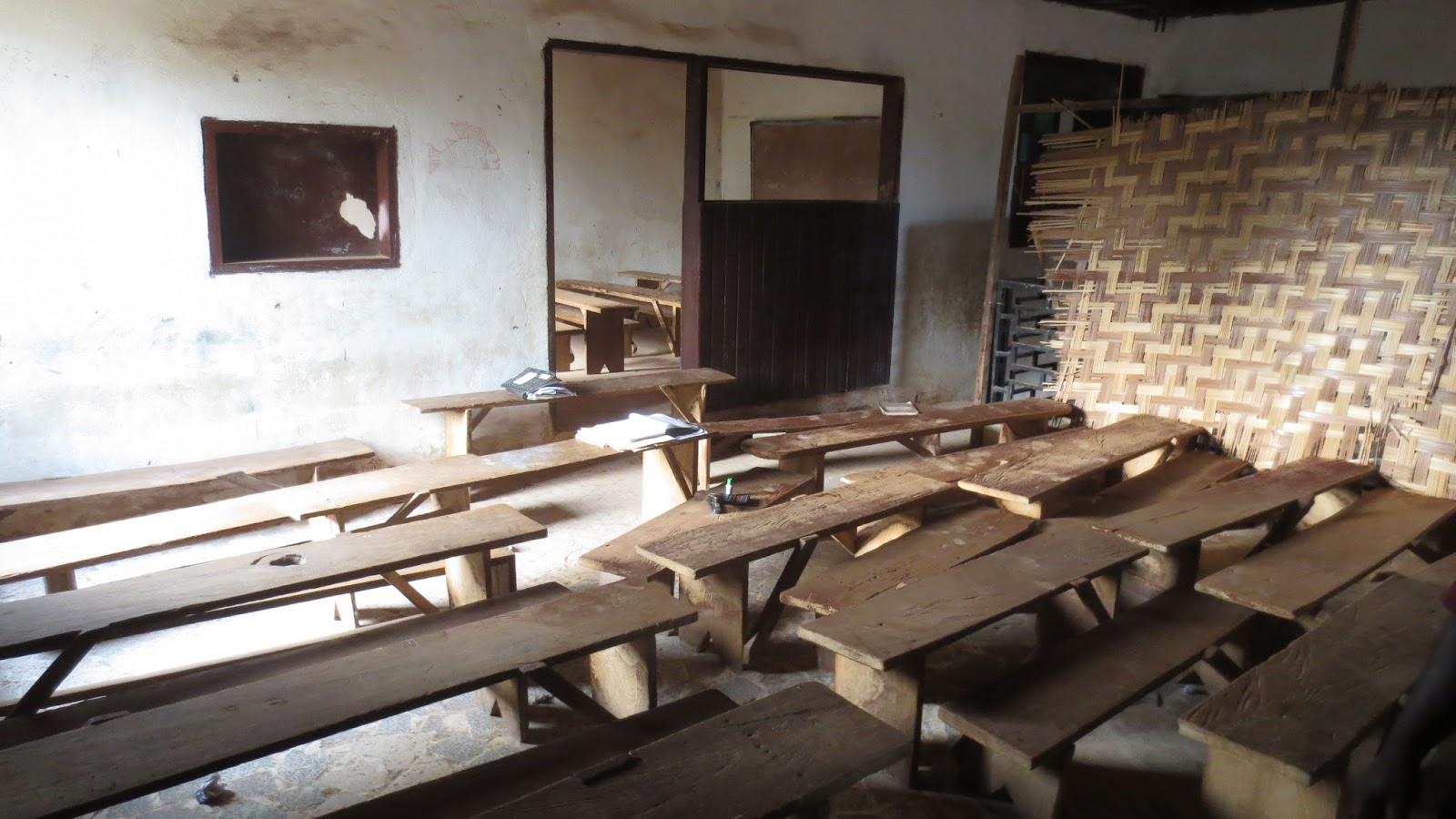
It is hard to imagine what it was like during the Ebola epidemic and the seven months Liberia shut itself down. Everyone treated everyone else as if they had become infected. As a result there was no school or games allowed for children who just sat in their houses, people were spaced far apart from one another during any gathering, taxis carried only a few passengers at increased fares, money was handled with rubber gloves, businesses closed, employees lost their jobs, and outside every house and business was a container of water with bleach for hand washing.
The people of Liberia went suddenly overnight from singing pop songs and making jokes about Ebola to drastically changing their lifestyles. This is probably the reason why the death toll wasn't higher. The area where I stayed was the first to experience Ebola death when an infected person was brought to the nearby hospital where he and two nurses died. They were the only ones who died of Ebola in my area. Other people I knew did die during this period from the many other causes of sudden death which affect Liberians.
The U.S. presence during the Ebola crisis came in the form of Marine helicopters landing in the university's soccer field. In three days they built an isolation unit at a leper colony site and left, never to be seen again. It is hard to really get a feel as to what affect these men and machines of both war and peace had on Liberians. The initial impact is great, but the lasting results are hard to measure. The unmanned isolation camp still stands.
What is there now is a greater presence of armed UN soldiers. Six armed soldiers in a convoy in the back of two Toyota pickups patrolled the area. The frequency a UN helicopter flights also was a lot more than I remember, as they supplied the nearby UN garrison.
On the flight to Liberia I asked Americans on the plane if anyone wanted to share a taxi from the airport to Monrovia. Fortunately, I got a ride in a new SUV by a group of Americans there for a few days from a Bill & Melinda Gates Foundation collecting blood samples from Ebola survivors for a few days. They got off at a beautiful ocean side resort while their driver took me to my hotel in Monrovia.
To a certain extend both the Marines and the Gates Foundation employees represent how American wealth and power are perceived by others. One wonders, as other Liberians perceive, if our "humanitarian" efforts are driven more by our own self-interests rather than a true desire to help others. When AIDS is thought of as an acronym for "Americans Interested in Discouraging Sex" and using Africans to test vaccines to protect Westerners, one wonders if there is not some truth to their beliefs.
The people of Liberia went suddenly overnight from singing pop songs and making jokes about Ebola to drastically changing their lifestyles. This is probably the reason why the death toll wasn't higher. The area where I stayed was the first to experience Ebola death when an infected person was brought to the nearby hospital where he and two nurses died. They were the only ones who died of Ebola in my area. Other people I knew did die during this period from the many other causes of sudden death which affect Liberians.
 |
| On the nearby campus of Cuttington University stands a memorial to its alumni who Ebola claimed. Most were health care workers. |
What is there now is a greater presence of armed UN soldiers. Six armed soldiers in a convoy in the back of two Toyota pickups patrolled the area. The frequency a UN helicopter flights also was a lot more than I remember, as they supplied the nearby UN garrison.
On the flight to Liberia I asked Americans on the plane if anyone wanted to share a taxi from the airport to Monrovia. Fortunately, I got a ride in a new SUV by a group of Americans there for a few days from a Bill & Melinda Gates Foundation collecting blood samples from Ebola survivors for a few days. They got off at a beautiful ocean side resort while their driver took me to my hotel in Monrovia.
To a certain extend both the Marines and the Gates Foundation employees represent how American wealth and power are perceived by others. One wonders, as other Liberians perceive, if our "humanitarian" efforts are driven more by our own self-interests rather than a true desire to help others. When AIDS is thought of as an acronym for "Americans Interested in Discouraging Sex" and using Africans to test vaccines to protect Westerners, one wonders if there is not some truth to their beliefs.